Pinellas
Hillsborough
Manatee
Sarasota
Florida
Logo for Tampa Pallet Company at: 813.626.5700
Pasco
Hernando
Polk
Highlands
Florida
Home  |   What We Do  |   Pallet Products  |   About Us  |   Contact Us
NEW PALLETS  |  USED PALLETS  |  USED EURO PALLETS  |  AUTOMOTIVE PALLETS  |  CRATES & BOXES  |  SURVEY STAKES  |  IPPC ISPM-15

Link National Wooden Pallet and Container Association Logo   Link National Wooden Pallet and Container Association Logo    NWPCA e-news logo

ISPM 15 Solid Wood Packaging Update
(May 1, 2010)


Countries with implementation changes since last update (October 15, 2009):

Australia: The Australian Quarantine and Inspection Service (AQIS) no longer requires a “Newly Manufactured Plywood Declaration” for plywood-veneer packaging. However, AQIS is still monitoring the risks associated with plywood and veneer packaging through surveys and target surveillance in order to verify that risks are adequately managed.

European Union (EU): EU member states still accept wood packaging fumigated with methyl bromide from other countries outside Europe. Their new regulation prohibiting the use of methyl bromide only applies to fumigation of wood packaging within Europe.

Indonesia: Indonesian Agricultural Quarantine Agency updated its Decree of the Minister of Agriculture No. 12/2009 to go in line with the 2009 edition of ISPM 15 (i.e. made of debarked wood).

Senegal: The Direction de la Protection des Vegetaux au Ministere de l’Agriculture (Plant Protection Department of the Ministry of Agriculture) of Senegal has proposed an implementation date of August 15, 2010.

Sri Lanka: The Department of Agriculture of Sri Lanka has been implementing ISPM 15 since March 8, 2010.

Summary information for countries that have begun implementation or announced plans to implement ISPM-15:

Argentina: June 1, 2006

Australia: September 1, 2004 (Variations to ISPM-15: Bark-free + packing declaration for ISPM-15 compliant WPM, 21-day rule does not apply); January 1, 2006 will add wood packaging used in break bulk and air cargo to their ISPM-15 enforcement.

Bolivia: July 23, 2005

Brazil: June 1, 2005

Bulgaria: January 24, 2006

Canada: September 16, 2005 (Exemption granted to U.S.)

Chile: June 1, 2005

China: January 1, 2006

Colombia: September 16, 2005

Costa Rica: March 19, 2006

Cuba: October 1, 2008

Dominican Republic: July 1, 2006

Ecuador: September 20, 2005

Egypt: October 1, 2005

European Union: March 1, 2005

Guatemala: September 16, 2005

Honduras: February 25, 2006

India: November 1, 2004 (Variation: Phytosanitary certificate required only for WPM not ISPM-15 compliant)

Indonesia: September 2009

Israel: October 31, 2009

Jamaica: October 20, 2007

Japan: April 1, 2007

Jordan: November 17, 2005

Lebanon: March 26, 2006

Malaysia: January 1, 2010

Mexico: September 16, 2005

New Zealand: April 16, 2003; starting November 1, 2009 switched to debarked WPM

Nicaragua: No published date of implementation

Nigeria: September 30, 2004

Norway: January 1, 2008

Oman: December 2006

Paraguay: June 28, 2005

Peru: March 1, 2005

Philippines: June 1, 2005

Senegal: August 15, 2010 (ISPM 15-compliant + bark-free)

Seychelles: March 1, 2006

South Africa: January 1, 2005

South Korea: June 1, 2005

Sri Lanka: March 8, 2010

Switzerland: March 1, 2005

Syria: April 1, 2006

Taiwan: July 2008

Tanzania: No published date of implementation

Thailand: No published date of implementation

Trinidad & Tobago: September 15, 2005

Turkey: January 1, 2006

Ukraine: October 1, 2005

U.S.: September 16, 2005 (Exemption granted to Canada -- must provide import declaration that shipment derived from trees harvested in U.S. or Canada -- import lumber must be ISPM-15; 24-hr methyl bromide fumigation schedule in their requirements for imported packaging effective February 7, 2008)

Venezuela: June 1, 2005

Vietnam: June 5, 2005

ISPM-15 Requirements
Treatment options are:
- Heat Treatment (HT): Wood packaging material should be heated in a schedule that achieves a minimum core temperature of 56ºC for a minimum of 30 minutes.
- Methyl Bromide (MB) Fumigation: The wood packaging material should be fumigated with methyl bromide.

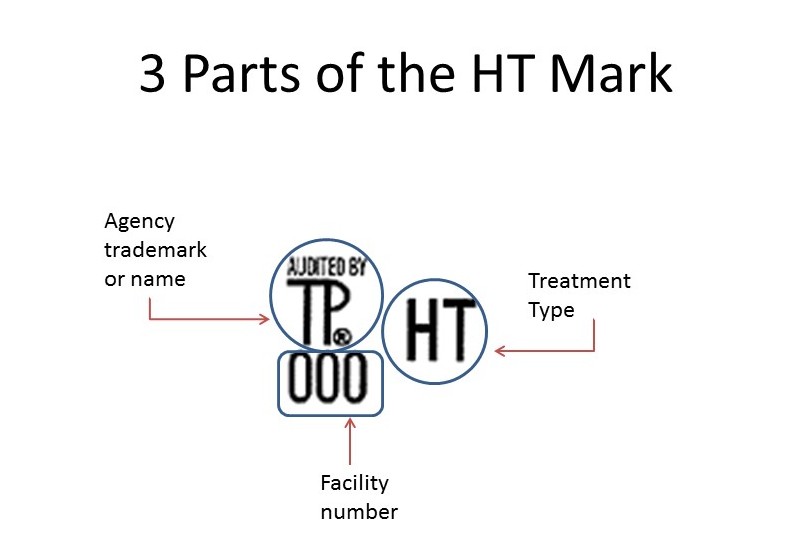
Mark with the following components:
- IPPC symbol
- country code
- producer/treatment provider code
- HT or MB
 

Must be made from debarked wood; small pieces of bark may remain if:
- Less than 3 cm in width (regardless of length) or
- Greater than 3 cm in width, with the total surface area of an individual
piece of bark less than 50 cm2


To the best of NWPCA's knowledge, ISPM 15 Wood Packaging Update contains current information as of the date of publication. NWPCA does not warrant or assume any legal liability for the accuracy or completeness of such information.

For more information regarding ISPM 15, contact Edgar Deomano at edeomano@palletcentral.com or 703.519.6104.


ISPM 15 Wood Packaging Update (October 15, 2009)

Countries with implementation changes since last update (June 2009):

Malaysia: The Malaysian Department of Agriculture will be implementing ISPM 15 on January 1, 2010. A six-month grace period started last July 1, 2009.

New Zealand: The Ministry of Agriculture and Forestry, Biosecurity New Zealand (MAFBNZ) have proposed changes to its Import Health Standard (IHS) for imported wood packaging based on the 2009 revision of ISPM 15 (i.e. from bark-free to debarked wood). Proposed implementation date is November 1, 2009.

Thailand: Thailand’s Ministry of Agriculture released its draft regulation for imported wood packaging, but has not announced an implementation date.

Summary information for countries that have begun implementation or announced plans to implement ISPM 15:

Argentina: June 1, 2006

Australia: September 1, 2004 (Variations to ISPM 15: Bark-free + packing declaration for ISPM 15 compliant WPM, 21-day rule does not apply); January 1, 2006 will add wood packaging used in break bulk and air cargo to their ISPM 15 enforcement.

Bulgaria: January 24, 2006

Bolivia: July 23, 2005

Brazil: June 1, 2005

Canada: September 16, 2005 (Exemption granted to U.S.)

Chile: June 1, 2005

China: January 1, 2006

Colombia: September 16, 2005

Costa Rica: March 19, 2006

Cuba: October 1, 2008

Dominican Republic: July 1, 2006

Ecuador: September 20, 2005

Egypt: October 1, 2005

European Union: March 1, 2005

Guatemala: September 16, 2005

Honduras: February 25, 2006

India: November 1, 2004 (Variation: Phytosanitary certificate required only for WPM not ISPM 15 compliant)

Indonesia: No published date of implementation (based on their draft regulation, WPM must be debarked and a packing declaration will be required)

Israel: October 31, 2009

Jamaica: October 20, 2007

Japan: April 1, 2007

Jordan: November 17, 2005

Lebanon: March 26, 2006

Malaysia: January 1, 2010

Mexico: September 16, 2005

New Zealand: April 16, 2003; starting November 1, 2009 will switch to debarked WPM

Nicaragua: No published date of implementation

Nigeria: September 30, 2004

Norway: January 1, 2008

Oman: December 2006

Panama: Not yet enforcing ISPM 15

Paraguay: June 28, 2005

Peru: March 1, 2005

Philippines: June 1, 2005

Seychelles: March 1, 2006

South Africa: January 1, 2005

South Korea: June 1, 2005

Switzerland: March 1, 2005

Syria: April 1, 2006

Taiwan: July 2008

Tanzania: No published date of implementation

Thailand: No published date of implementation

Trinidad & Tobago: September 15, 2005

Turkey: January 1, 2006

Ukraine: October 1, 2005

U.S.: September 16, 2005 (Exemption granted to Canada -- must provide import declaration that shipment derived from trees harvested in U.S. or Canada -- import lumber must be ISPM 15; 24-hr methyl bromide fumigation schedule in their requirements for imported packaging effective February 7, 2008)

Venezuela: June 1, 2005

Vietnam: June 5, 2005

ISPM-15 Requirements

Compliance with ISPM 15 for wood packaging materials allows for two treatment options:

Heat Treatment (HT): Wood packaging material should be heated in a schedule that achieves a minimum core temperature of 56ºC for a minimum of 30 minutes. The American Lumber Standards Committee administers the U.S. certification program for heat treatment.

Methyl Bromide (MB) Fumigation: The wood packaging material should be fumigated with methyl bromide. NWPCA has been tasked by the U.S. Animal and Plant Health Inspection Service to administer the fumigation program.

NOTE: ISPM 15 requirements apply to all species of coniferous (softwood) and non-coniferous (hardwood) packaging materials.


To the best of NWPCA's knowledge, ISPM 15 Wood Packaging Update contains current information as of the date of publication. NWPCA does not warrant or assume any legal liability for the accuracy or completeness of such information.

As of June 2009
By Edgar Deomano, Ph.D., Technical Director, NWPCA   June 2009

Since its publication in 2002, ISPM 15 has been revised twice. The Commission on Phytosanitary Measures (CPM) approved the first change in 2006 when the methyl bromide fumigation schedule was modified from 16 to 24 hours. And just recently, the CPM approved the 2009 edition of ISPM 15.

The major changes in ISPM 15-2009 are as follows:

Wood packaging must be made of debarked wood. Any number of visually separate and clearly distinct small pieces of bark may remain if they are:

•Less than 3 cm in width (regardless of length) or
•Greater than 3 cm in width, with the total surface area of an individual piece of bark less than 50 cm2.

Removal of bark must be carried out before fumigation because the presence of bark on the wood effects the efficacy of methyl bromide treatment.

•Repaired and remanufactured wood packaging are required to have their previous marks permanently obliterated (e.g. by covering with paint or grinding), the unit to be retreated and the ISPM 15 mark must be applied again in order to qualify for export shipments.
•Inspection agency logo will be outside of the ISPM 15 mark.

All ISPM amendments are effective when approved but each country sets its own adoption policies. With these changes in ISPM 15, the American Lumber Standards Committee (ALSC) Wood Packaging Material (WPM) program and the NWPCA Methyl Bromide (MB) program are making sure these new ISPM 15 provisions are enforced in the United States. U.S. trading partners are also adopting these new provisions in their regulations.

Listed below are countries that have announced ISPM 15 implementation since NWPCA’s last update on April 27:

Indonesia: The Indonesian Agricultural Quarantine Agency proposed an implementation date of September 2009. Aside from ISPM 15-compliance, Indonesia will require the WPM to be debarked, free from plant quarantine pest, soil-free and accompanied by a packing declaration.

Israel: The State of Israel Plant Protection and Inspection Service proposed an implementation date of Oct. 31, 2009.

Nicaragua: The Ministerio Agropecuario y Forestal notified the World Trade Organization (WTO) that they have amended the Nicaraguan Mandatory Technical Standard for imported wood packaging. Information about Nicaragua’s new requirements is not available.

South Korea: The National Plant Quarantine Service of South Korea is now requiring imported WPM to be debarked before phytosanitary treatment, free from live pests and methyl bromide not be used for WPM with components more than 200 mm wide.


Austalia: See sidebar

To date, there are 170 contracting parties to the International Plant Protection Convention (IPPC). Of the 170 contracting parties, 67 have adopted ISPM 15 in their regulations for imported wood packaging. It has been NWPCA’s recommendation that all wood packaging be ISPM 15-compliant (i.e. treated and marked) regardless of international destination.

ISPM 15 treatment and marking are acceptable in the quarantine states (Illinois, Indiana, Michigan and Ohio) and counties (in Maryland, Minnesota, Missouri, Pennsylvania, Virginia, West Virginia and Wisconsin) affected by the emerald ash borer (EAB). This applies to new, repaired and remanufactured wood packaging with green ash components that are shipped outside of the quarantine state or county. The U.S. Department of Agriculture (USDA) enforces the federal quarantine at the state level and a state (agriculture or environment) agency implements the local quarantine.


SIDEBAR: ISPM 15 Implementation in Australia

The Australian Quarantine and Inspection Service (AQIS) released Notice to Industry 23/2009 Changes to AQIS documentation requirements for the clearance of imported cargo. The proposed implementation date for these policies is Aug. 1, 2009.

Here are the proposed changes pertaining to wood packaging:

•Packing declarations: declarations must be issued by the packer or supplier of goods.
• Plywood/veneer packaging: declaration will no longer be acceptable for packaging and dunnage. Packaging and dunnage made from plywood/veneer must be declared as timber packaging and subject to ISPM 15 treatment and marking.
• ISPM 15 treatment certificates: paper certificates will no longer be accepted.

NWPCA informed the Animal and Plant Health Inspection Service (APHIS) about the mandatory treatment of packaging and dunnage made from plywood or veneer. In a letter dated May 20, the APHIS Assistant Deputy Administrator has formally petitioned AQIS not to implement their new requirements for imported wood packaging.


As of March 3, 2008

Countries with implementation changes since last update(October 23, 2006):

Taiwan: Will enforce ISPM 15 on July 2008.

United States: Has incorporated the 24-hr methyl bromide fumigation schedule in their requirements for imported packaging effective February 7, 2008.

Proposed change between US and Canada (information relayed to NWPCA by the USDA APHIS Forestry Products Trade Director)
The U.S. Department of Agriculture’s Animal & Plant Health Inspection Service APHIS) and Canada Food Inspection Agency (CFIA) have determined the ISPM 15 wood packaging exemption between the two countries has become disadvantageous to controlling the introduction and spread of invasive species.


The growing number of invasive species establishing in the two countries mandates the removal of the ISPM No. 15 exemption to further insure the safety of our groves, orchards, forests and nurseries. The USDA and CFIA are developing an action plan which involves a 2 year phase-in period. The three phases of implementation will take part in four steps:


1. One year for industry preparations to comply with the standard.

2. Phase 1: Six months of informed compliance. Notices will be posted in connection with cargo that contains noncompliant WPM.

3. Phase 2: Six months of rejection of violative noncompliant wood crates and wood pallets through re-exportation. Informed compliance and notices posted in cargo with other types of noncompliant WPM (dunnage, blocking and bracing).

4. Phase 3: Full Enforcement on all articles of regulated WPM entering United States of America and North America. Shipments containing noncompliant regulated WPM will not be allowed to enter United States of America.


An official start dates will be announced after further discussions with CFIA, Customs and Border Protection and Canada Border Services Agency.


ISPM 15 Solid Wood Packaging Update
(October 23, 2006)

Countries with implementation changes since last update (August 16, 2006):

Based on WTO notification by the countries below, the following are now or soon will be enforcing ISPM 15:

Japan: April 1, 2007

The following countries have incorporated the 24-hr methyl bromide fumigation schedule in their requirements for imported packaging:

Canada: Effective August 1, 2006 (Exemption still granted to the U.S.)

China: Implemented NOW
Methyl Bromide Schedule

The minimum temperature should not be less than 10°C and the minimum exposure time should be 24 hours. Monitoring of concentrations should be carried out at a minimum at 2, 4, and 24 hours.

When a fumigation treatment schedule is revised and adopted, as with China and Canada, wood packaging material (WPM) already treated and marked under the previous schedule does not need to be retreated, remarked or recertified. It only applies to WPM that will be treated after adoption of the new schedule.

The Enforcement Committee has adopted this 24-hr fumigation schedule in the MB Program. All certified fumigators have been advised to start using the new schedule immediately; the schedule will be mandatory and has been implemented effective September 18, 2006 (Monday).

Notice to Department of Defense (DoD) vendors.

The Department of Defense has announced that its shipments both “inside and outside of the United States must meet ISPM 15.” These requirements will be reflected in Defense Logistic Agency solicitations issued as of August 1, 2006. DOD pallets must be heat treatment or kiln dried (DOD does not accept fumigation as a treatment method). For more information, see the American Lumber Standard Committee, Incorporated Web page at. http://www.alsc.org/

Summary information for countries that have begun implementation or announced plans to implement ISPM-15:

Argentina: June 1,2006

Australia: September 1, 2004 (Variations to ISPM-15: Bark-free + packing declaration for ISPM-15 compliant WPM, 21-day rule does not apply); January 1, 2006 will add wood packaging used in break bulk and air cargo to their ISPM-15 enforcement.

Bulgaria: January 24, 2006

Bolivia: July 23, 2005 (Variation: Debarked WPM)

Brazil: June 1, 2005

Canada: September 16, 2005 (Note: Phase-in implementation; exemption granted to U.S.)

Chile: June 1, 2005 (Variation: Debarked WPM)

China: January 1, 2006 (Variation: MB fumigation for softwood packaging must use the 24-hour treatment schedule. ALSO: Although not a requirement, it is highly recommended to make a statement in Chinese language on the shipping invoice "WPM are ISPM 15-compliant," "WPM are exempt from ISPM 15" or "There is no WPM in this shipment.")

Colombia: September 16, 2005

Costa Rica: March 19, 2006

Dominican Republic: July 1, 2006

Ecuador: September 20, 2005 (Date change: previously April 26, 2004)

Egypt: October 1, 2005

European Union: March 1, 2005

Guatemala: September 16, 2005

Honduras: February 25, 2006

India: November 1, 2004 (Variation: Phytosanitary certificate required only for WPM not ISPM-15 compliant)

Indonesia: No published date of implementation (based on their draft regulation, WPM must be debarked and a packing declaration will be required)

Japan: January 2007 (tentative date of implementation)

Jordan: November 17, 2005

Lebanon: March 26, 2006

Mexico: September 16, 2005 (Note: Phase-in implementation since January 1, 2004)

New Zealand: April 16, 2003 (Variation: Bark-free WPM)

Nicaragua: No published date of implementation

Nigeria: September 30, 2004

Oman: December 2006

Panama: Not yet enforcing ISPM 15

Paraguay: June 28, 2005

Peru: March 1, 2005

Philippines: June 1, 2005

Seychelles: March 1, 2006

South Africa: January 1, 2005 (Variation: 24-MB schedule for softwood packaging)

South Korea: June 1, 2005 (Variation: MB fumigation for softwood packaging must use the 24-hour treatment schedule.)

Switzerland: March 1, 2005

Syria: April 1, 2006

Trinidad & Tobago: September 15, 2005

Turkey: January 1, 2006 (Variation: Debarked WPM)

Ukraine: October 1, 2005

U.S.: September 16, 2005 (Note: Phase-in implementation; exemption granted to Canada -- must provide import declaration that shipment derived from trees harvested in U.S. or Canada -- import lumber must be ISPM-15)

Venezuela: June 1, 2005

Vietnam: June 5, 2005

ISPM-15 Requirements

Compliance with ISPM-15 for wood packaging materials allows for two treatment options:

Heat Treatment (HT): Wood packaging material should be heated in a schedule that achieves a minimum core temperature of 56ºC for a minimum of 30 minutes. The American Lumber Standards Committee administers the U.S. certification program for heat treatment.

Methyl Bromide (MB) Fumigation: The wood packaging material should be fumigated with methyl bromide. NWPCA has been tasked by the U.S. Animal and Plant Health Inspection Service to administer the fumigation program.

NOTE: ISPM 15 requirements apply to all species of coniferous (softwood) and non-coniferous (hardwood) packaging materials.


To the best of NWPCA's knowledge, NWPCA E-News: International Wood Packaging Requirements contains current information from government sources on International Wood Packaging Requirements as of the date of publication. NWPCA does not warrant or assume any legal liability for the accuracy or completeness of such information.

NEW PALLETS  |  USED PALLETS  |  USED EURO PALLETS  |  AUTOMOTIVE PALLETS  |  CRATES & BOXES  |  SURVEY STAKES  |  IPPC ISPM-15
Home  |   What We Do  |   Pallet Products  |   About Us  |   Contact Us